What Is Biomimetic Dentistry? A New Way to Restore Teeth While Respecting Their Natural Design
By Dr. Grace Ordóñez
Biological & Biomimetic Dentistry | Cuenca, Ecuador | Over 30 Years of Experience | More Than 15,000 Patients Treated
When a tree branch breaks, nature attempts to repair it.
When the skin is cut, the body begins a healing process.
When a bone fractures, it starts to regenerate.
Our bodies were designed to preserve, repair, and protect what already exists.
For many years, however, dentistry followed a different philosophy: when a tooth became damaged, the solution was often to remove healthy tissue and replace it with artificial materials.
Today, that philosophy is changing.
And from that shift comes biomimetic dentistry.
What Does «Biomimetic» Mean?
The word biomimetic comes from two concepts: bio, meaning life, and mimesis, meaning imitation.
Simply put, biomimetic dentistry seeks to imitate the characteristics of a healthy natural tooth.
Its primary goal is to restore a tooth’s form, function, strength, flexibility, and natural behavior as closely as possible to the way nature originally designed it.
The question is no longer:
What can we replace?
The question is:
What can we preserve?
Why Preserving a Natural Tooth Is Still the Best Option
Many patients come to our office after years of accumulated dental treatment: fillings, crowns, reconstructions, or repeated repairs.
Often, the issue is not a single restoration. It is the gradual loss of natural tooth structure over time.
And there is one reality that no technological advancement has been able to change:
Nothing functions exactly like a healthy natural tooth.
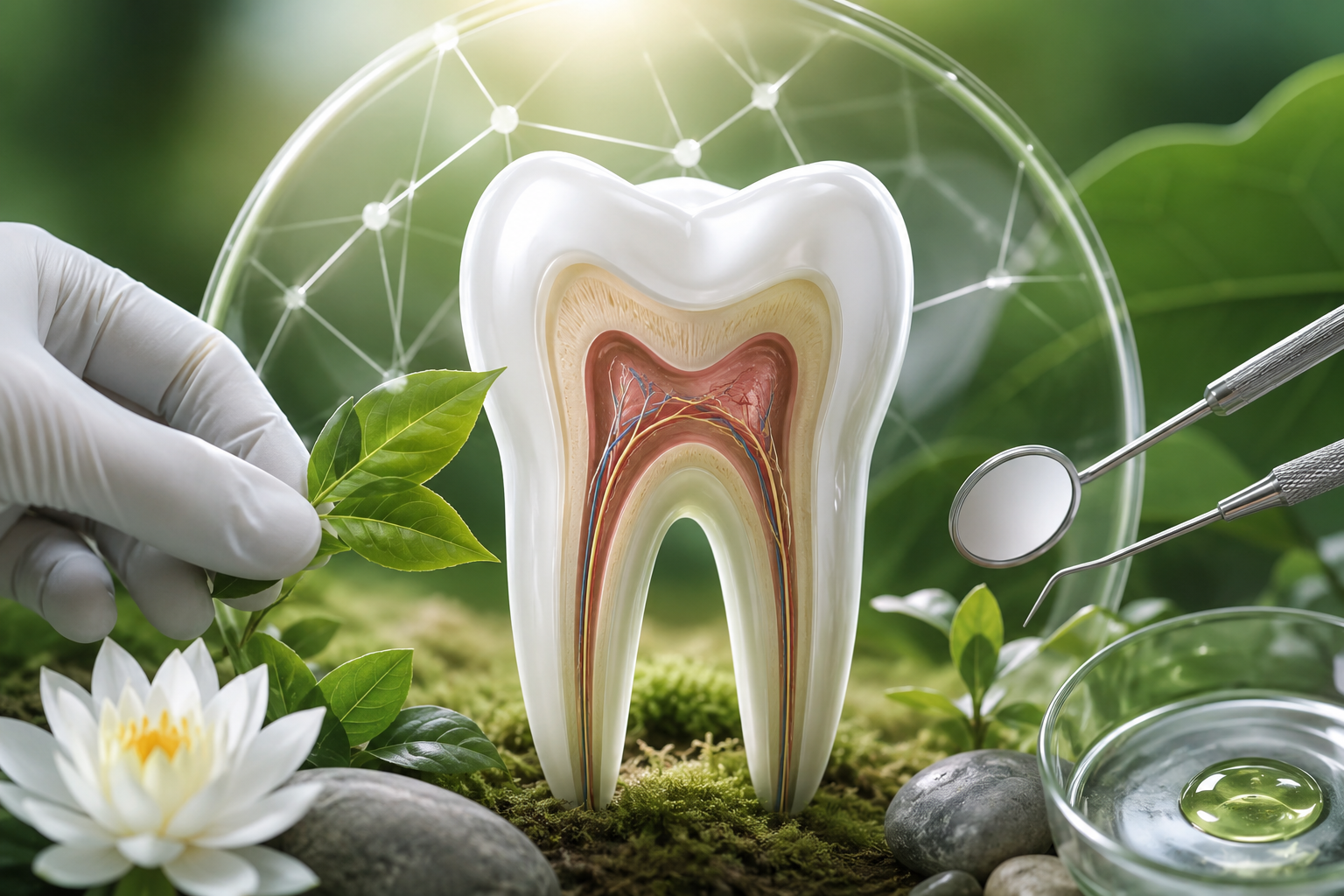
Enamel, dentin, and the supporting structures work together as an extraordinarily complex system. Each layer plays a specific role in absorbing forces, protecting the nerve, and maintaining tooth stability for decades.
That is why, whenever possible, preserving the original tooth structure often provides better long-term outcomes than replacing it prematurely.
How Biomimetic Dentistry Works
Biomimetic dentistry combines science, technology, and advanced materials to restore teeth in a way that respects their natural design.
This means:
• Preserving as much healthy tooth structure as possible.
• Avoiding invasive procedures when conservative alternatives exist.
• Using advanced adhesive materials.
• Reinforcing the remaining tooth structure.
• Distributing chewing forces similarly to a natural tooth.
The goal is not simply to fill a space.
The goal is to restore function, strength, and longevity.
Materials That Work With the Body
One of the most exciting developments in modern dentistry is the use of bioactive materials.
Unlike many traditional materials, these do not remain passive inside the mouth.
They interact with the oral environment and help protect dental structures.
One example is nano-hydroxyapatite, a material composed of the same mineral that makes up much of natural tooth enamel. Its role is to support remineralization processes and strengthen weakened tooth surfaces.
There are also bioactive glasses and advanced ceramic-based adhesive systems that help create more stable and biocompatible restorations.
In Biomimetic Dentistry, How Are Materials Chosen and Bonded to the Tooth?
In biomimetic dentistry, the choice of material is just as important as the technique used.
The ideal material should mimic the natural tooth in terms of behavior, flexibility, adhesion, strength, esthetics, and function.
In traditional dentistry, materials have often been selected primarily for their mechanical strength or their ability to replace damaged tooth structure, even when that requires removing additional healthy tooth tissue.
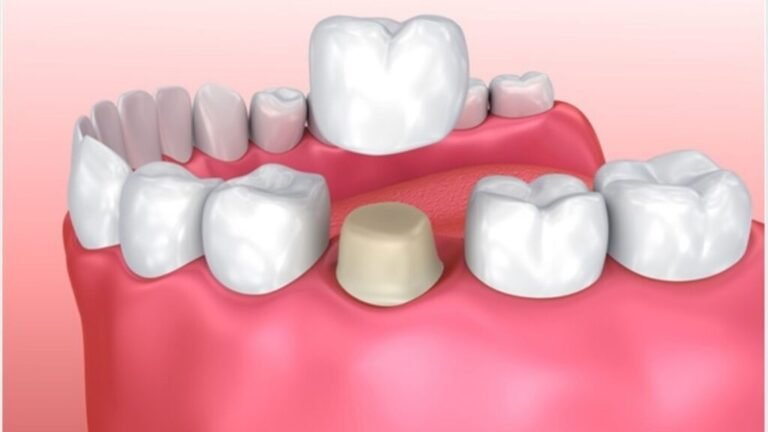
Biomimetic dentistry favors adhesive materials such as advanced composite resins, bonded ceramics, modified glass ionomers, bioactive materials, and modern dentin bonding systems. These materials are designed to form a strong bond with both enamel and dentin.
Traditional dentistry has historically relied more heavily on materials such as amalgam, porcelain-fused-to-metal crowns, full-coverage crowns, conventional cements, and retention-based restorations. Many of these materials do not integrate chemically with the tooth in the same way and instead depend on larger preparations, mechanical retention, or additional tooth reduction.
An Approach That Is Also Part of Biological Dentistry
Many people hear the terms biomimetic dentistry and biological dentistry and assume they mean the same thing.
While they are closely related, each offers a different perspective.
Biological dentistry focuses on how oral health affects the rest of the body and prioritizes biocompatible materials, safe treatment protocols, and a whole-body approach to patient care.
Biomimetic dentistry focuses specifically on preserving and restoring teeth by replicating the structure and function that nature created.
In practice, these approaches work together.
One protects the patient’s overall health.
The other protects the natural integrity of their teeth.
Who Can Benefit from Biomimetic Dentistry?
This approach may be especially beneficial for individuals who:
• Have fractured or weakened teeth.
• Have older restorations that need replacement.
• Want to avoid unnecessary invasive procedures.
• Prefer biocompatible, metal-free materials.
• Want to preserve their natural teeth for as long as possible.
• Are interested in a more modern and integrative approach to oral health.
A Philosophy That Changes the Patient Experience
Recently, I met with a patient who had been told she needed several crowns. Her main concern was losing more tooth structure than necessary.
After a careful evaluation, we discovered that much of her natural tooth structure could be preserved using more conservative restorative techniques.
What surprised her most was not the treatment itself.
It was discovering that she still had options.
And that is one of the greatest advantages of biomimetic dentistry: it often allows us to preserve more than we initially imagine.
The Philosophy That Guides Our Practice
After more than thirty years in dentistry, there is one principle that guides every decision I make:
Every natural tooth we can preserve is a victory for the patient’s health.
That means preserving before replacing.
Preserving before extracting.
And choosing materials that respect both the biology of the body and the natural architecture of the tooth.
Because when we work with nature instead of against it, the results tend to be healthier, longer-lasting, and more predictable.
A Smarter Way to Care for Your Smile
For decades, dentistry focused on one question:
How do we replace what has been lost?
Biomimetic dentistry asks a different question:
How can we preserve what is still working?
In many cases, that small shift in perspective can completely change the future of a tooth.
Because the best restoration is often the one that most closely resembles what nature originally created.
And preserving what is natural will always be better than replacing it too soon.