Avoiding Unnecessary Crowns: Is It Always Necessary to Grind Down a Tooth?
By Dr. Grace Ordóñez, DDS
Biological & Biomimetic Dentistry, Cuenca, Ecuador, ACESS Certified | Over 15,000 Patients Treated
Most patients who come to our office with a recommendation for a dental crown ask the same question:
«Is this really my only option for saving the tooth?»
It’s a reasonable concern and one of the most important questions you can ask before making an irreversible decision.
For decades, crowns have been one of the most common solutions for restoring weakened or damaged teeth. In many cases, they remain an excellent treatment option. However, advances in biomimetic dentistry now allow us to preserve significantly more natural tooth structure than was possible in the past.
The Value of Preserving a Natural Tooth
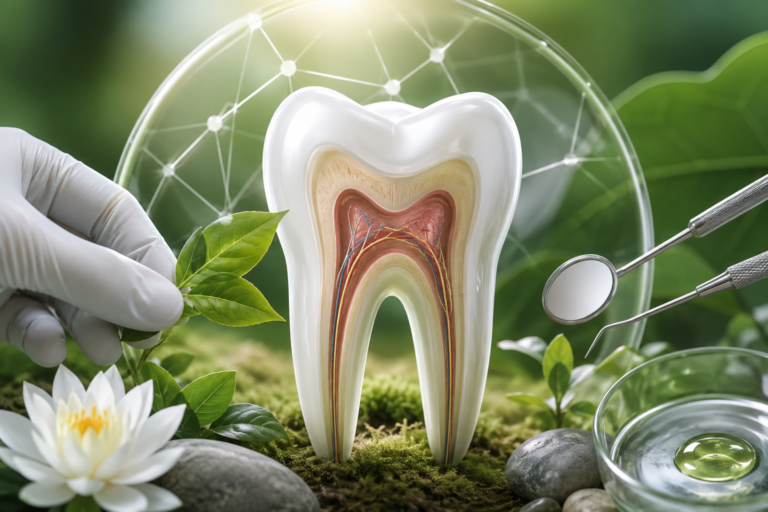
Every natural tooth is a unique structure designed to withstand chewing forces, protect internal tissues, and function for decades.
That is why, when a tooth requires treatment, the question should not simply be how to repair it, but how much of it can be preserved.
Biomimetic dentistry is built on that philosophy:
Preserve whenever possible. Replace only when necessary.
When a Crown Seemed Like the Only Option
Some time ago, an American patient who spends part of the year in Cuenca came to our office.
He had received a treatment plan that included several crowns. He was not looking for a less expensive solution. He simply wanted to understand whether other options truly existed.
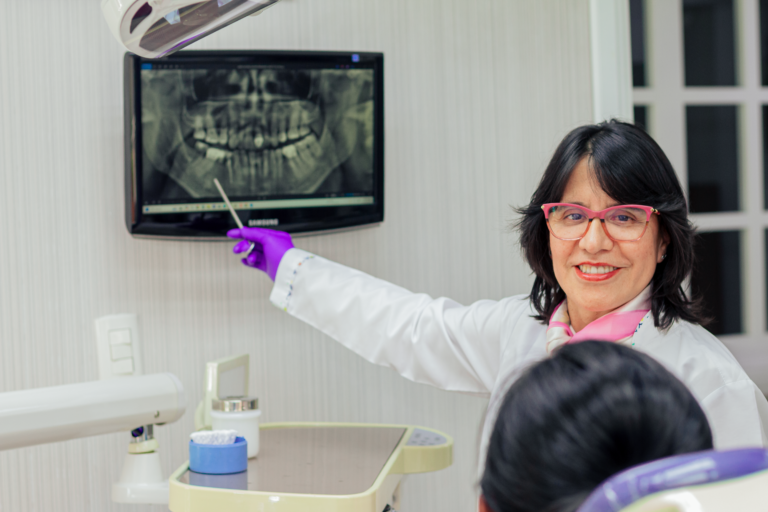
After carefully reviewing his X rays and the remaining structure of each tooth, we found that several could be restored with bonded ceramic onlays, preserving a significant portion of their natural tooth structure.
At the end of the appointment, he said something I hear quite often:
«Nobody had explained to me that I could still keep my own teeth.»
That statement captures much of the philosophy behind biomimetic dentistry.
It is not about avoiding crowns.
It is about making sure they are truly necessary before removing natural tooth structure that can never be replaced.
Why Crowns Became So Popular
For many years, crowns represented the most predictable way to protect weakened teeth.
Modern adhesive materials and advanced ceramics either did not exist or did not offer the strength and reliability they provide today.
Thanks to the evolution of adhesive dentistry, many teeth can now be restored more conservatively without sacrificing function or durability.
What Does a Crown Actually Require?
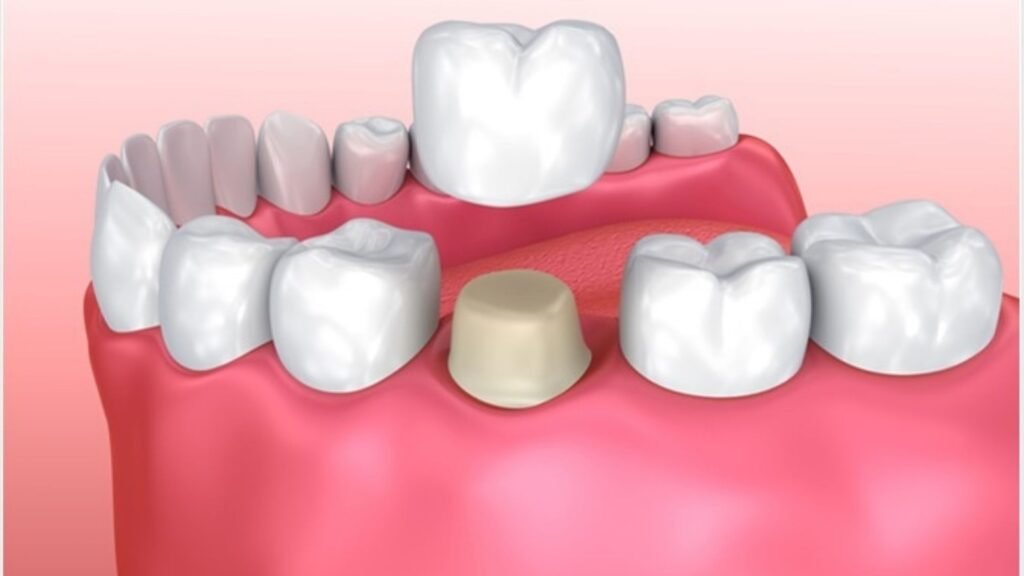
A dental crown completely covers a tooth to restore strength and stability.
To place a crown properly, a significant amount of tooth structure must be reduced on all surfaces.
When damage is extensive, this preparation may be entirely justified.
However, it is important to understand that once enamel and dentin are removed, the body cannot regenerate them.
That is why it is worth exploring less invasive alternatives before deciding that a crown is necessary.
The Biological Cost of Losing Tooth Structure
When a tooth retains more of its natural structure, it often maintains its strength and function more effectively over the long term.
It also preserves more treatment options for the future.
Every time a restoration requires a more aggressive preparation, less natural tooth structure remains available for future repairs.
Biomimetic dentistry seeks to avoid that cycle whenever possible.
Clinical studies have demonstrated survival rates exceeding 90% at ten years for properly indicated indirect ceramic restorations.
The difference is not only how long they last—it is how much natural tooth structure they allow us to preserve.
How Adhesive Dentistry Changed Modern Dentistry
Biomimetic dentistry utilizes advanced adhesive systems that allow restorations to bond precisely to the tooth.
Rather than relying primarily on mechanical retention, these techniques distribute chewing forces in a way that more closely resembles nature.
This approach makes it possible to preserve more tooth structure without compromising strength or function.
Biomimetic Dentistry and Biological Dentistry
Biomimetic dentistry and biological dentistry share a common philosophy:
Working with the body’s natural biology rather than against it.
Both approaches aim to preserve healthy tissues, use biocompatible materials, and support long term health.
While biomimetic dentistry focuses on replicating the natural structure and function of teeth, biological dentistry expands that perspective to include the relationship between oral health and overall wellness.
The Value of a Second Opinion
Many patients seek a second opinion after being advised to receive a crown or undergo a tooth extraction.
They are not looking for someone to tell them what they want to hear.
They simply want to understand all available options before making a permanent decision.
And that is entirely reasonable.
Every tooth is different.
Every patient is different as well.
The Philosophy That Guides Our Practice
After more than thirty years in dentistry, I still believe that nature created the best tooth possible.
Our job is to help it last as long as possible.
That is why, before recommending any treatment, the question is always:
What can we preserve?
Because every time we preserve natural tooth structure, we increase the chances that the tooth will continue serving the patient for many years to come.
Your Natural Tooth Is Still the Best Tooth
Modern dentistry offers extraordinary materials, advanced restorations, and increasingly sophisticated dental implants.
But they all share the same goal:
To replace what nature originally created.
That is why, whenever it is possible to preserve a natural tooth safely and predictably, that is often the best option.