
Dental Implant in Cuenca: The Question No Dentist Had Ever Asked Susan
Susan moved to Cuenca looking for a dentist she could trust. One simple question from Dr. Grace Ordóñez changed the way she understood her oral health. Discover why so many expats choose Cuenca for their dental care.
Keywords:
dentist for expats Cuenca, dental implant Cuenca Ecuador, functional dentistry Cuenca, peri-implantitis treatment, dental care Cuenca expats
PATIENT STORY · FUNCTIONAL & BIOLOGICAL DENTISTRY · CUENCA, ECUADOR
The Question No Dentist Had Ever Asked Susan
How a Dental Consultation in Cuenca Revealed Something Much Deeper — and Why More Expats Are Trusting Dr. Grace Ordóñez with Their Oral Health
Susan thought she simply needed help saving a dental implant.
What she didn’t expect was that a seemingly routine dental appointment in Cuenca would reveal something much deeper about her health, her habits, and the way she had been using her mouth for years.
And it all began with a question no dentist had ever asked her before:
«Which side do you normally chew on?»
A New Chapter in Cuenca, Ecuador
Like many retirees, Susan had spent years imagining what life after retirement would look like. She wanted a place with a slower pace, safety, comfort, and the sense of peace she had been searching for.
During her research, one destination kept appearing again and again: Cuenca, Ecuador.
Its spring-like climate year-round, UNESCO World Heritage historic center, affordable cost of living, vibrant culture, and established expat community convinced her. Eighteen months ago, Susan packed her bags and began a new chapter in her life.
What she didn’t know then was that one of the best decisions she would make after settling in Cuenca would have nothing to do with real estate, banking, or residency paperwork.
It would have everything to do with her health.
The Dental Issue Susan Had Been Putting Off
About eight months after arriving in Cuenca, Susan started thinking about something she had postponed for far too long: her dental health.
Before leaving the United States, she had undergone several dental procedures, including a dental implant. Since arriving in Ecuador, however, she had not scheduled a single dental checkup.
Like many expats, she wasn’t sure where to go.
Finding a new dentist in another country can feel overwhelming.
Who can you trust?
Who takes the time to explain things clearly?
Who understands the concerns of a patient living far from home?
While speaking with fellow expatriates in Cuenca, one name kept coming up consistently:
Dr. Grace Ordóñez.
The recommendations were remarkably similar: thorough, compassionate, attentive, and highly skilled.
But there was something else.
Dr. Grace practiced dentistry differently.
Functional and Biological Dentistry: Looking Beyond Teeth
Functional dentistry doesn’t focus solely on treating teeth, fillings, crowns, or implants as isolated issues.
Instead, it examines how the entire oral system functions as an integrated whole.
WHAT FUNCTIONAL DENTISTRY EVALUATES
✓ Chewing function and bite balance
✓ Jaw mechanics and temporomandibular joints (TMJ)
✓ Chewing patterns and oral habits
✓ Nutrition and its impact on oral tissues
✓ Gum and soft tissue health
✓ Overall systemic wellness related to oral health
The goal is not simply to identify where a problem exists.
The goal is to understand why it developed in the first place.
For Susan, who had undergone multiple treatments without anyone ever asking that critical question, this approach felt refreshingly different.
She scheduled her appointment.
Interested in a Functional Dental Evaluation?
Dr. Grace Ordóñez offers comprehensive initial consultations for expats living in Cuenca. Your first visit includes a complete functional evaluation—not just a review of symptoms.
A Dental Experience That Feels Different
The difference was noticeable from the moment Susan arrived.
Elizabeth, Dr. Grace’s assistant, greeted her warmly and immediately helped her feel comfortable.
The atmosphere was calm.
Unhurried.
Welcoming.
There was none of the transactional feeling that sometimes accompanies healthcare appointments.
Instead of moving directly into treatment options, Dr. Grace did something Susan had rarely experienced before:
She listened.
Carefully, Patiently. Without interruptions.
Susan later described that first appointment as one of the few times she felt a healthcare professional was genuinely interested in understanding her story—not just her symptoms.
The Diagnosis: Peri-Implantitis
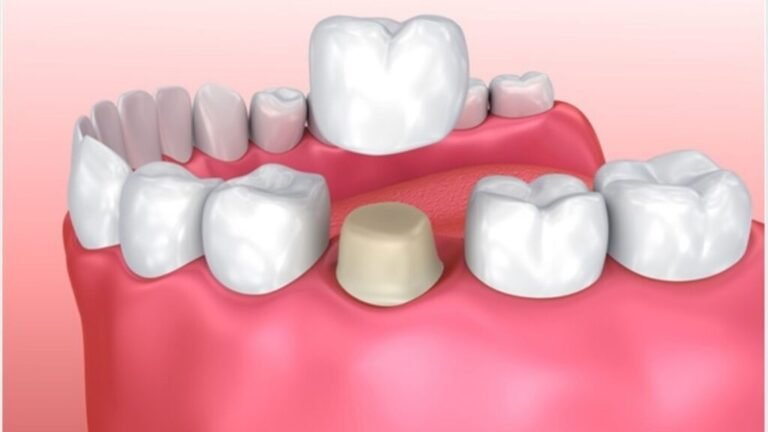
During the examination, Dr. Grace identified signs of peri-implantitis around one of Susan’s dental implants.
Peri-implantitis is an inflammatory condition affecting the tissues surrounding an implant. If left untreated, it can lead to progressive bone loss and compromise the long-term stability of the implant.
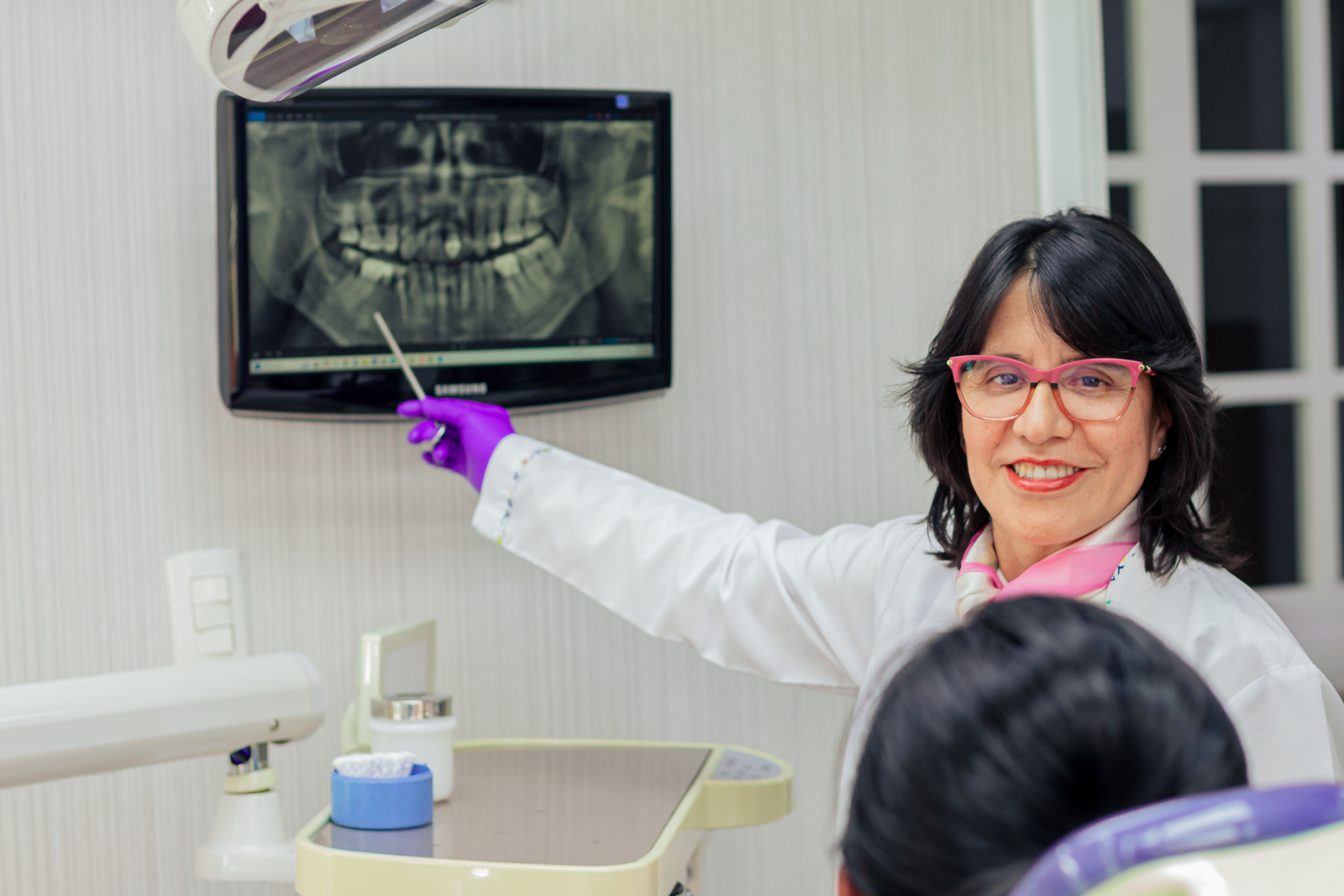
To better understand the situation, Dr. Grace recommended a 3D CBCT scan.
Unlike traditional dental X-rays, CBCT imaging allows dentists to visualize the implant, surrounding bone, and supporting structures from multiple angles.
WHAT A 3D CBCT SCAN CAN REVEAL
✓ The exact amount of bone loss present
✓ Hidden defects not visible on conventional X-rays
✓ The precise shape and extent of the affected area
✓ The condition of surrounding tissues
✓ The long-term prognosis of the implant
The Question That Changed Everything
After reviewing the scan, Dr. Grace began asking questions that initially seemed unrelated.
«Which side do you normally chew on?»
«How would you describe your diet?»
«Do you tend to favor one side of your mouth?»
Susan paused.
Then she realized something.
For years, she had avoided chewing on the left side of her mouth.
Several previous dental procedures had caused discomfort, and over time she had unconsciously adapted.
She also admitted that most of her meals consisted of relatively soft foods—soups, pasta, fish, and mashed potatoes.
«Not because the answer was right or wrong—but because an important piece of the puzzle had finally appeared.»
What Most People Never Learn About Their Mouth
Dr. Grace explained something Susan had never heard before.
The teeth, jaw, muscles, bone, and joints are not separate structures.
They function as a single integrated system.
Every time we chew properly, forces are transmitted through the teeth and jawbone, stimulating bone tissue, supporting circulation, and helping maintain healthy function throughout the oral system.
When one side of the mouth remains underused for months—or even years—the tissues in that area receive less functional stimulation.
Just like a muscle weakens when it isn’t exercised, parts of the chewing system can gradually lose function when they are not used regularly.
For Susan, this was a revelation.
No previous dentist had ever explained how her habits, diet, and chewing patterns could be influencing her oral health.
Why So Many Expats Choose Dental Care in Cuenca
Susan’s story reflects something many expatriates discover after moving to Cuenca.
They arrive looking for high-quality dental care at a more affordable cost.
What they find is something even more valuable:
Professionals who listen.
Professionals who prioritize relationships over procedures.
Professionals who see patients as people—not appointments.
WHAT MAKES DR. GRACE ORDÓÑEZ DIFFERENT
✓ Functional and Biological Dentistry approach that addresses root causes, not just symptoms
✓ Advanced diagnostic technology, including 3D CBCT imaging
✓ Bilingual English-Spanish care for the expat community
✓ First appointments focused on education and comprehensive health history
✓ A welcoming team committed to patient comfort
✓ Fees significantly lower than those typically found in North America
More Than Dentistry
When Susan left the office that day, she walked away with a treatment plan.
But she also left with something she hadn’t expected:
A deeper understanding of her own health.
Because sometimes the most important discoveries happen when someone takes the time to ask a different question.
Frequently Asked Questions
What is functional dentistry, and how is it different from traditional dentistry?
Functional dentistry evaluates the entire oral system—including chewing patterns, bite balance, nutrition, oral habits, and jaw mechanics—to understand why a problem developed, not just where it exists. It is a preventive, educational, and whole-person approach to oral health.
What is peri-implantitis, and can it be treated?
Peri-implantitis is an inflammatory condition affecting the tissues surrounding a dental implant. When diagnosed early, it can often be treated through specialized cleaning protocols, local antimicrobial therapies, and in some cases, procedures designed to regenerate lost bone tissue.
How long does an initial evaluation take?
The first appointment is designed to be comprehensive. It may include a review of your medical and dental history, a functional assessment, and diagnostic imaging if needed. Patients should plan for approximately 60 to 90 minutes for their initial visit.